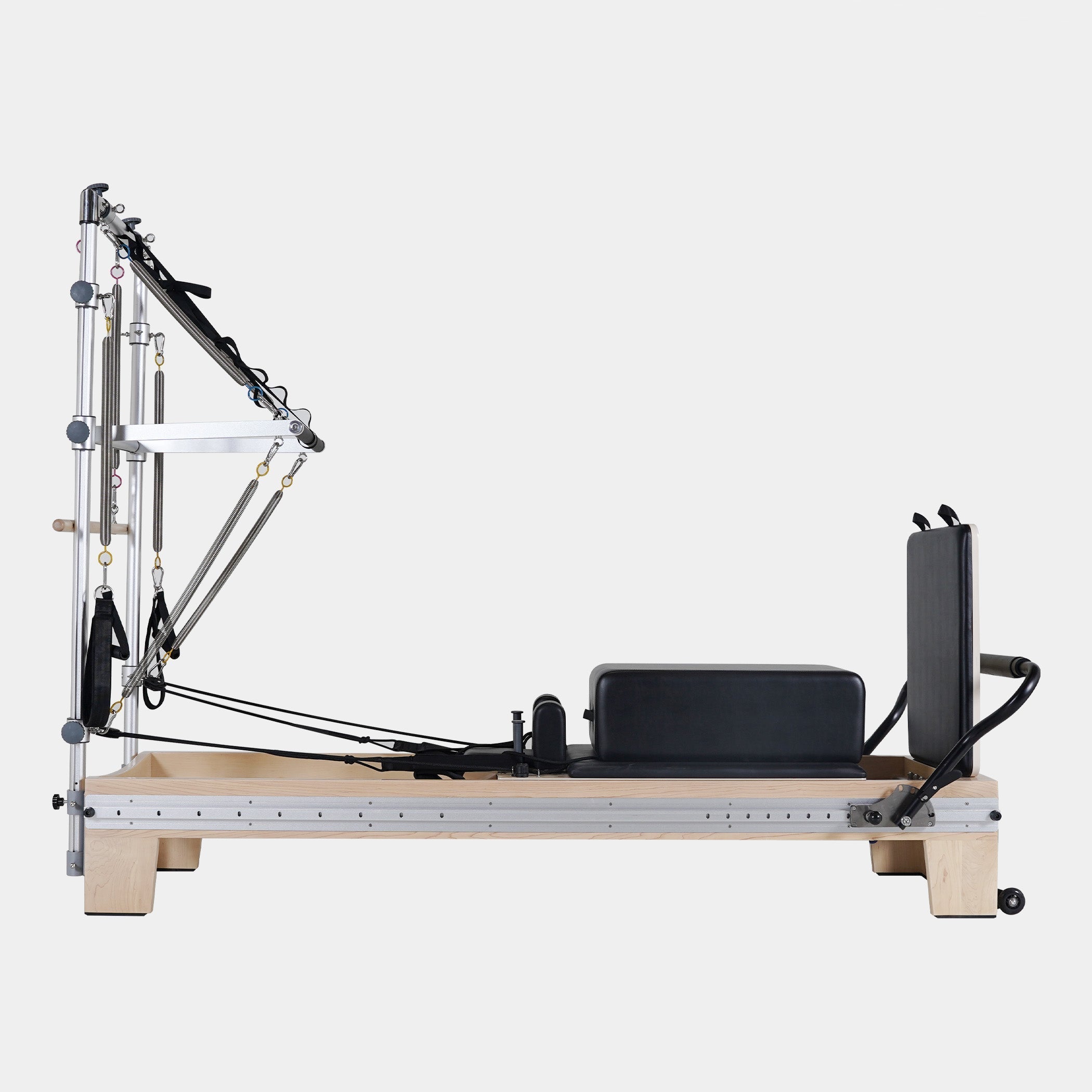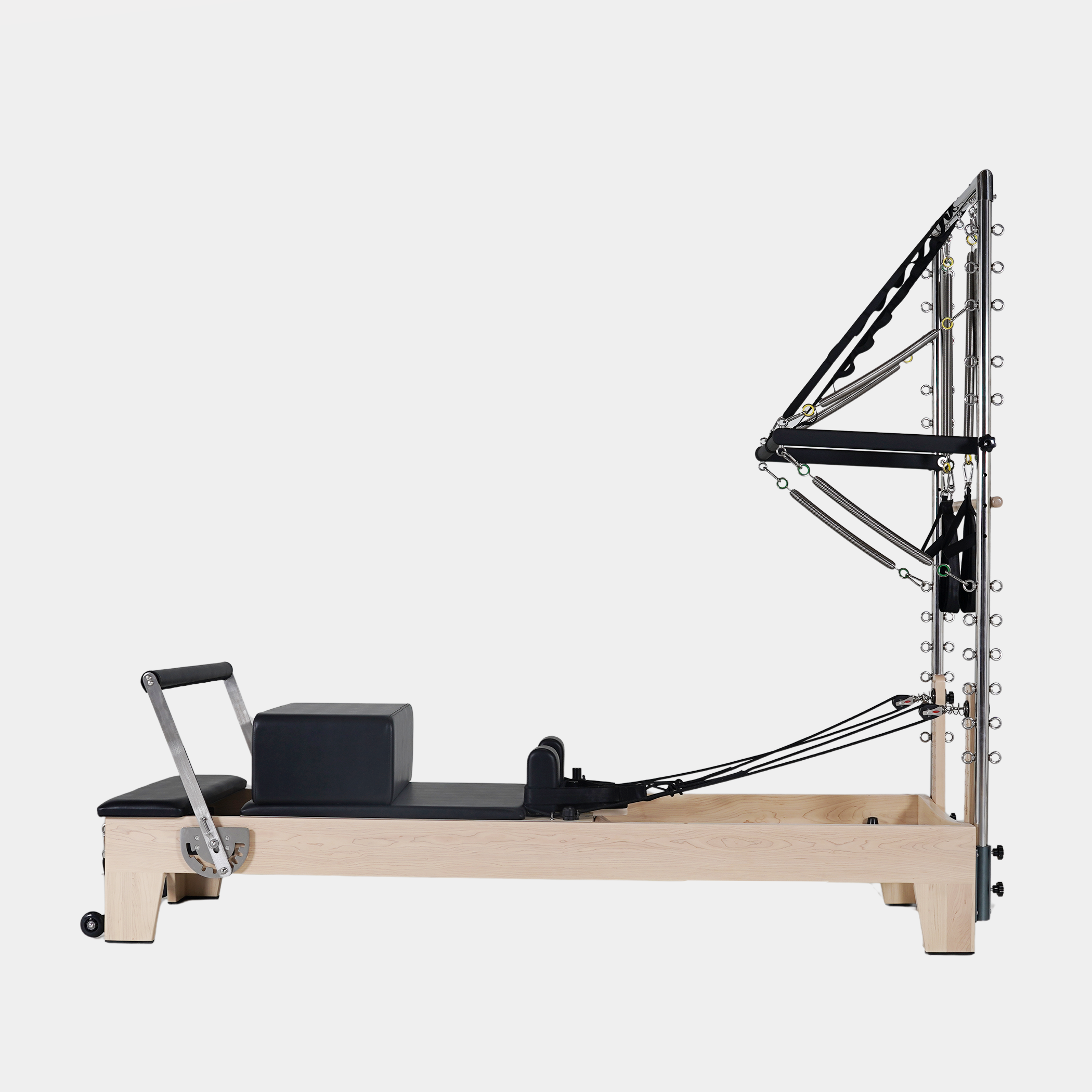
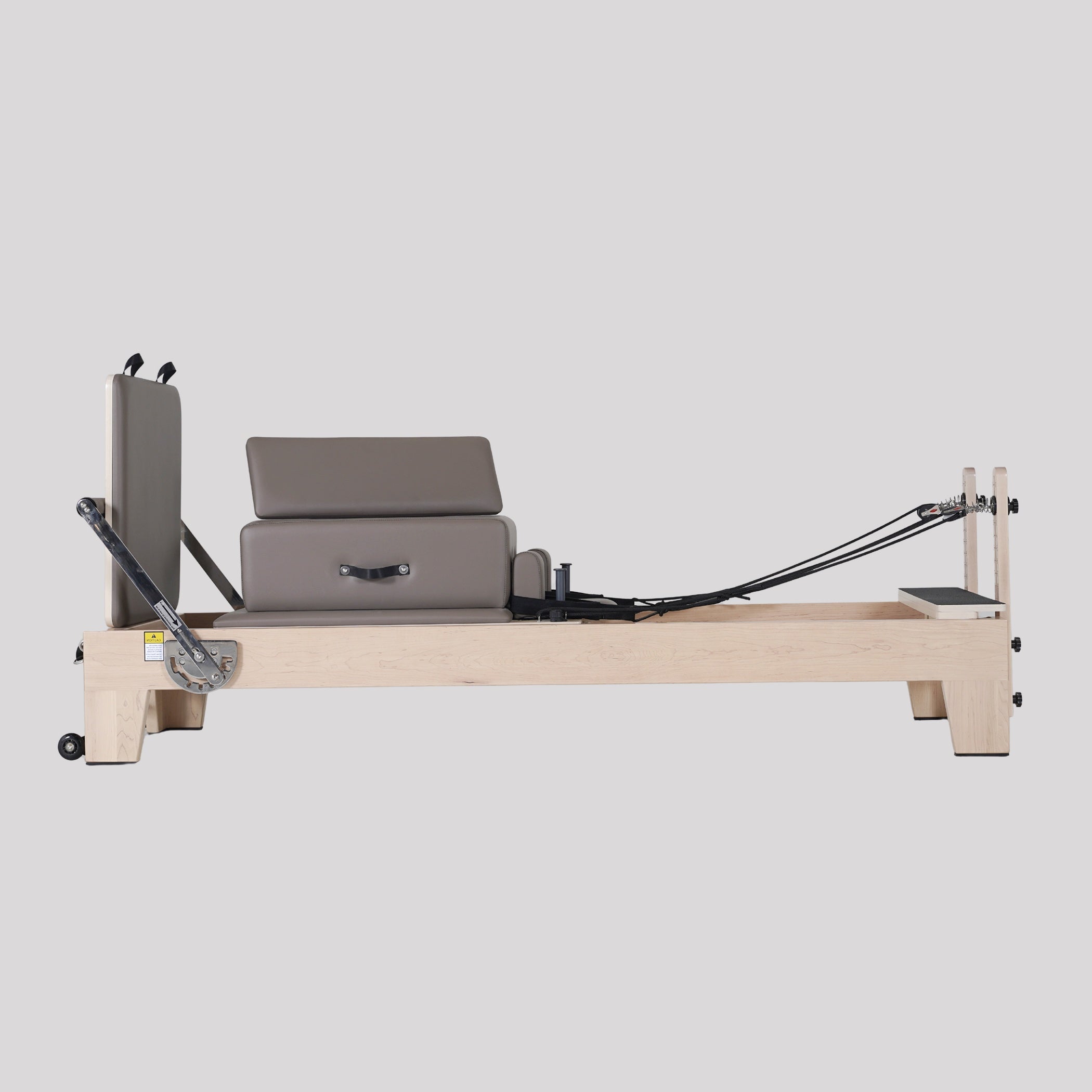
Maple, Oak, or Aluminum? Choosing the Right Reformer Frame Material
The frame is the foundation of any Pilates reformer. It determines how stable the machine feels, how long it lasts, and how it looks in your home. Maple, oak, and aluminum are the three materials worth considering — and each has a clear place. Here's how to choose.
Maple: the studio standard
Maple is the wood most professional studios choose, and for good reason. It's dense, strong, and exceptionally stable, with a fine grain that takes a beautiful finish. A maple reformer feels solid underfoot, absorbs movement quietly, and is built to last for many years of regular use.
- Best for: practitioners who want the most authentic, long-term studio experience.
- Strengths: stability, durability, refined appearance.
- Consider: typically a premium choice, reflecting the quality of the material.
Oak: warmth and value
Oak is a robust hardwood with a warm, open grain and excellent load-bearing strength. An oak reformer offers much of the solidity and beauty of premium wood, often at a friendlier price point — a sensible balance for many home studios.
- Best for: buyers who want a durable wooden reformer with character and value.
- Strengths: strength, distinctive grain, approachable price.
- Consider: grain and tone vary naturally between pieces — part of the appeal of real wood.
Aluminum alloy: light and modern
Aircraft-grade aluminum is rigid, corrosion-resistant, and noticeably lighter than wood, which makes an aluminum reformer easier to move and reposition. It suits a clean, contemporary aesthetic and humid environments where wood needs more care.
- Best for: those who value a modern look, lower weight, and easy handling.
- Strengths: rigidity, light weight, low maintenance.
- Consider: a different feel and look than natural wood — a matter of preference.
Quick comparison
| Material | Feel | Maintenance | Look | Typical price |
|---|---|---|---|---|
| Maple | Very solid, quiet | Low (occasional wood care) | Classic, premium | Premium |
| Oak | Solid, warm | Low (occasional wood care) | Warm, characterful | Mid–premium |
| Aluminum alloy | Rigid, lighter | Very low | Modern, minimal | Varies |
How to decide
- Want the closest thing to a professional studio? Choose maple.
- Want durable real wood with great value? Choose oak.
- Want something light, modern, and low-maintenance? Choose aluminum.
Whichever you choose, prioritise overall build quality — a well-made frame in any of these materials will serve you far better than a poorly built one. To keep a wooden frame in excellent condition, see our wooden reformer care guide.
Explore reformers by material
Browse our maple, oak, and aluminum collections, or see the full range of Pilates reformers. Every Reformora reformer is backed by our warranty and support, so you can choose your material with confidence.
Frequently asked questions
Why do most studios use maple reformers?
Maple is dense, stable, and durable, with a refined finish that holds up to years of heavy use. Those qualities make it a dependable, long-lasting choice for professional settings.
Is an oak reformer as good as maple?
Oak is a strong, durable hardwood that performs excellently for home use, often at a friendlier price. Maple is the studio benchmark, but a well-built oak reformer is a sound long-term choice.
Is an aluminum reformer durable?
Aircraft-grade aluminum is rigid and corrosion-resistant, and requires very little maintenance. It's lighter than wood, which makes it easier to move.
Which material lasts the longest?
With proper care, all three can last many years. Build quality, hardware, and how well you maintain the machine matter as much as the material itself.