How to Choose the Right Pilates Reformer for Your Home
Choosing a Pilates reformer is a considered purchase — it's a piece of equipment you'll use for years, not a passing accessory. The good news is that the decision becomes simple once you know what actually matters. This guide walks you through it calmly and clearly, so you can choose the right reformer for your home with confidence.
Start with three questions
Before comparing models, answer these. They narrow the field faster than any spec sheet.
- How much space can you give it? A full-size reformer needs a roughly 8-foot footprint. If a permanent spot isn't realistic, a foldable model changes everything.
- What's your experience level? Complete beginners and seasoned practitioners can use the same machine — but a tower or studio bundle opens up more advanced work over time.
- How will you use it? Daily mobility and core work, strength training, or a full studio-style repertoire each point toward a slightly different setup.
The main types of reformer
Classic full-size reformer
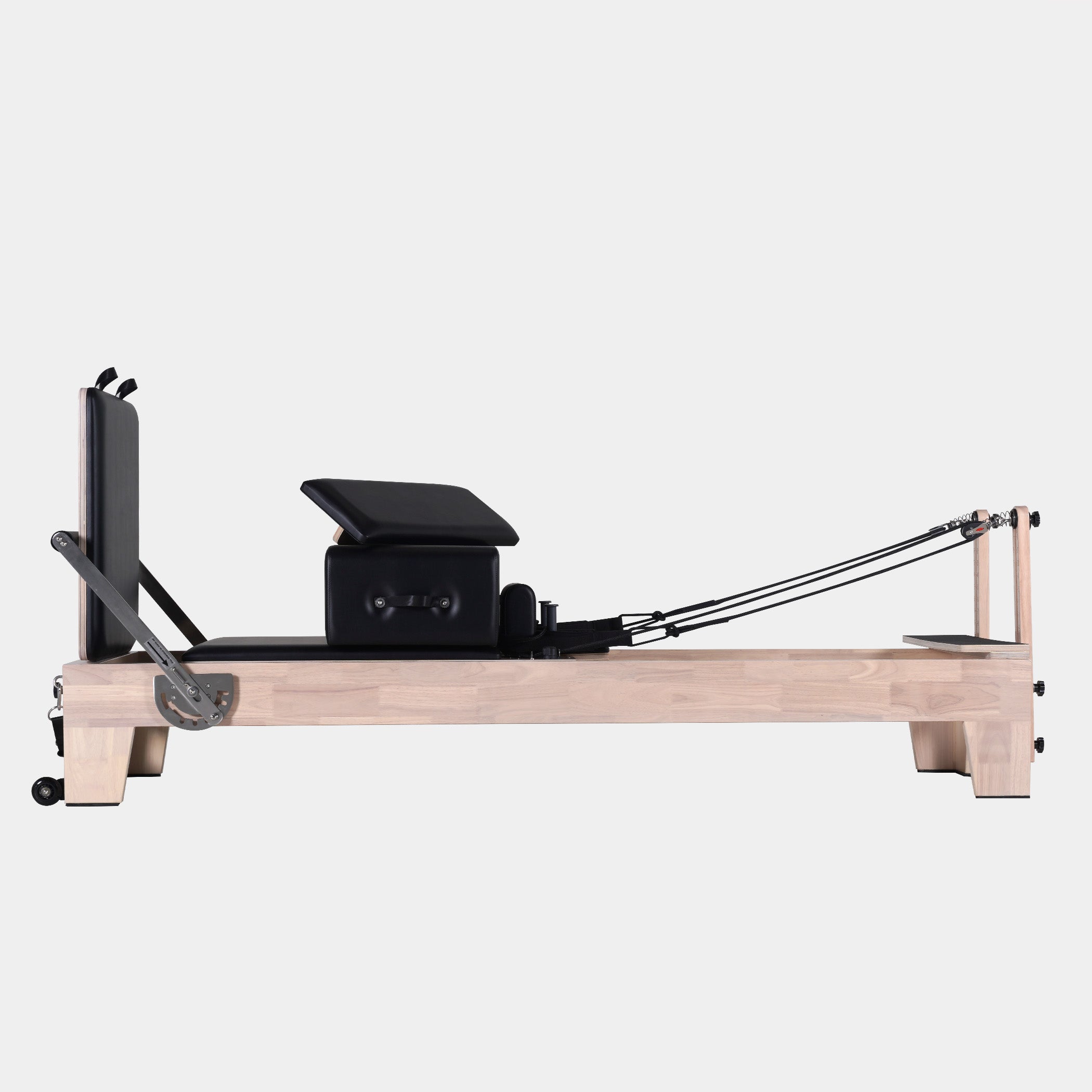
The benchmark experience: a long, stable carriage with a smooth glide and the full range of traditional exercises. If you have a dedicated room or corner, a classic Pilates reformer gives you the most authentic studio feel.
Foldable reformer
Engineered for smaller homes and apartments. A foldable Pilates reformer delivers the same spring resistance and carriage movement, then folds upright in seconds to store against a wall or in a closet. For most renters and city dwellers, this is the most practical choice.
Reformer with tower
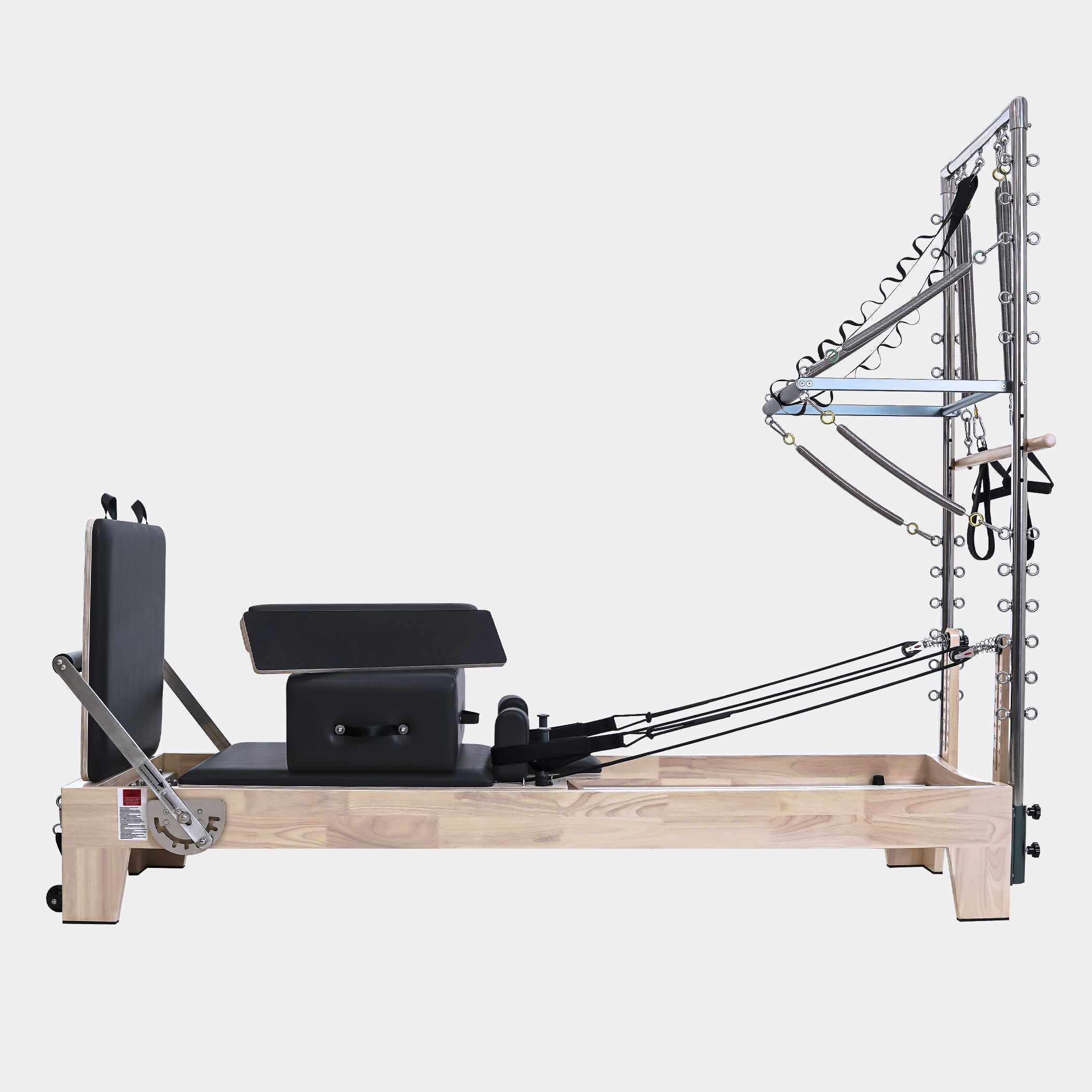
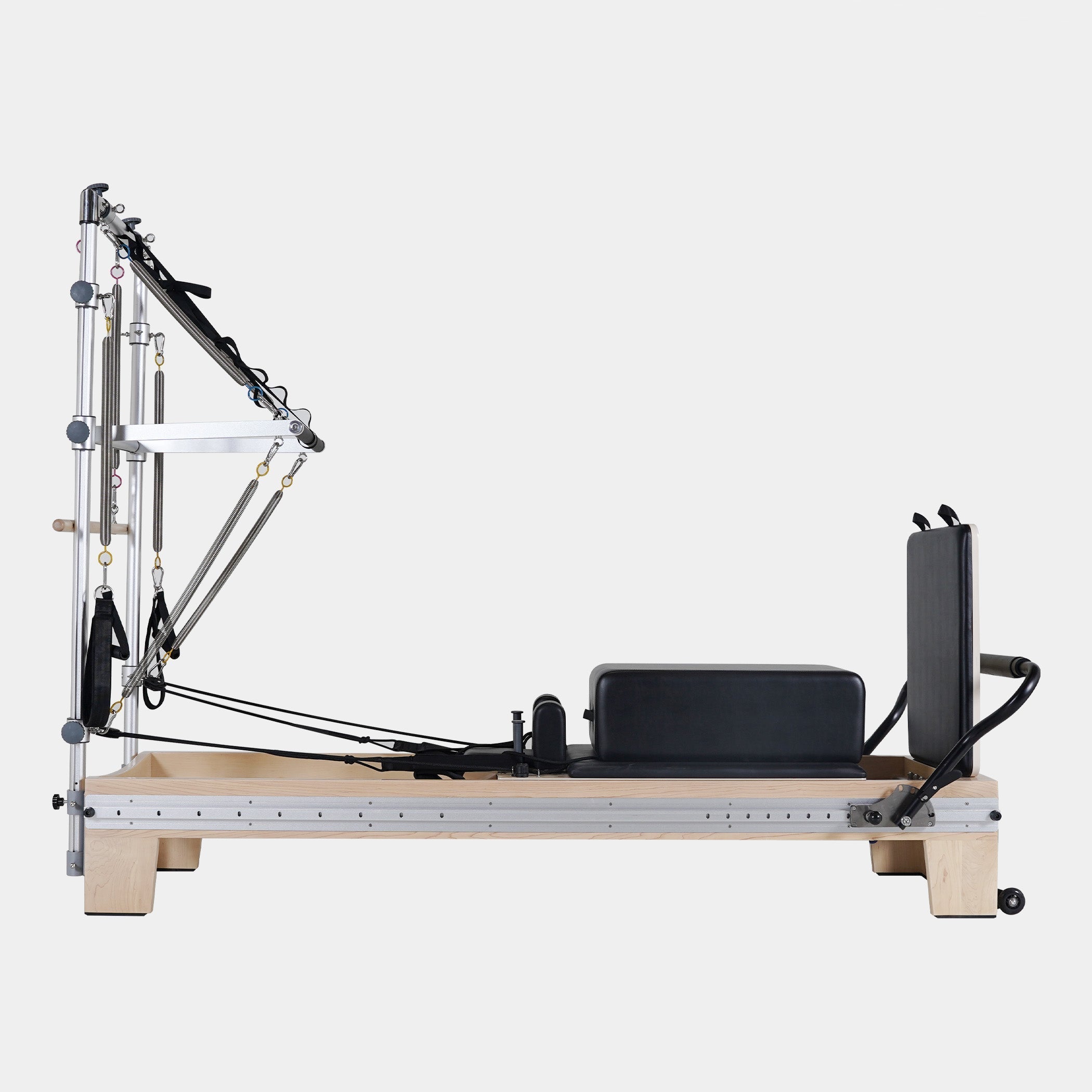
A reformer with tower adds a vertical frame with a push-through bar and additional springs. It expands your repertoire considerably — closer to a half-Cadillac — and suits anyone who wants room to progress for years.
Studio bundle
If you're building a true home studio or teaching, a studio bundle pairs a reformer with complementary apparatus for the widest range of work.
The features that genuinely matter
Marketing language can be noisy. These are the things that affect how a reformer feels and how long it lasts:
- Frame material. Look for solid maple, oak, or aircraft-grade aluminum — not particleboard. The frame determines stability and longevity.
- Carriage glide and rails. Quality wheels on smooth, quiet rails make every movement feel controlled. A rattly carriage is the clearest sign of a cut-corner build.
- Spring system. Real, graded springs (not elastic cords) give you scalable resistance from gentle to demanding, and feedback that helps you find correct form.
- Footbar and headrest adjustability. Multiple positions let the machine fit your body and your exercises, not the other way around.
- Folding mechanism (if foldable). An assisted or smooth manual fold you'll actually use daily — not an awkward lift.
Matching the reformer to your space
Space is the most common reason people hesitate, and it's usually solvable. As a rule of thumb, allow a clear area of about 9 ft × 4 ft while training. A foldable model reclaims that space the moment you finish. Every Reformora product page lists exact unfolded and folded dimensions, so you can measure your room before you buy. If you'd like a step-by-step approach, our guide on how much space you need for a reformer covers it in detail.
Frame material in one minute
- Maple — the studio standard: strong, stable, beautiful, and built to last. Explore maple reformers.
- Oak — warm grain and excellent durability, often at a friendly price. See oak reformers.
- Aluminum alloy — light, rigid, and easy to move. Browse aluminum reformers.
We compare these in depth in our reformer material guide.
Common mistakes to avoid
- Buying on price alone. A very cheap reformer often glides poorly and wears out — frustrating and rarely a saving in the long run.
- Underestimating clearance. Many exercises extend your arms and legs beyond the carriage. Plan for the movement, not just the machine.
- Ignoring after-sale support. Warranty, parts availability, and a real team to answer questions matter on equipment you'll keep for years.
Buying with confidence at Reformora
Every Reformora reformer is selected for studio-grade build quality and backed by our warranty and responsive support. Delivery is insured, and our returns policy is written to be fair and clear. If you're weighing options, our team is glad to help you choose — no pressure, just guidance.
Frequently asked questions
Which Pilates reformer is best for a beginner?
Most beginners do well with a stable full-size or foldable reformer with an adjustable footbar and a clear spring range. The supportive feedback of a reformer actually makes learning correct form easier than mat work for many people.
Do foldable reformers feel as stable as full-size models?
A well-built foldable reformer feels solid and stable during movement. Stability comes from the frame and locking mechanism, not from being permanently fixed — which is why build quality matters more than format.
How much space do I really need?
Plan for a clear area of about 9 ft by 4 ft while you train. A foldable model lets you reclaim that space afterward, so even a living room or studio apartment can work.
Is a reformer with tower worth it for home use?
If you want a wider exercise repertoire and room to progress over the years, a tower adds meaningful versatility. Our dedicated guide on the reformer with tower explains who benefits most.